The Contemplative Stone: Exploring Kyoto’s Secret Gardens
Beyond the tour buses of Ryoan-ji lies a quieter network of sub-temples where silence remains unbroken.
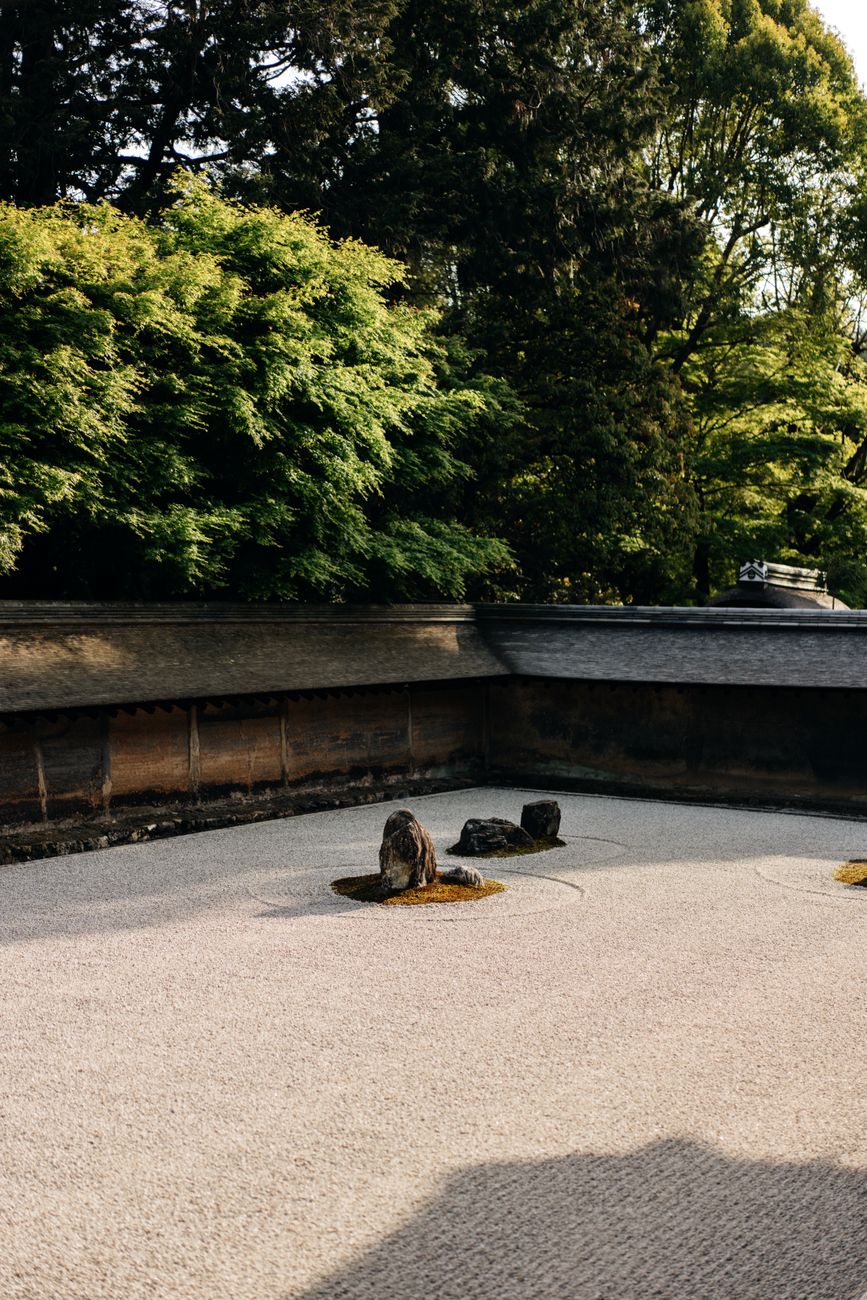
The rain arrived over Mount Hiei in a soft, continuous shroud of mist. In Northern Kyoto, where temple roofs disappear into wet stands of bamboo, the air smells of wet Hinoki cypress and extinguished incense. While the well-trodden verandas of popular shrines brim with hurried selfies, just three alleys away sits an unmarked wooden lattice gate.
The Weight of Morning Rain
Here at Zuiho-in, stepping out of leather shoes onto oiled cedar boards requires an instinctive deceleration. The dampness amplifies every tactile sensation: the cold spring air on the collarbones, the gentle texture of tatami mats under wool socks, and the stark visual contrast of charcoal-toned stones emerging from white quartz sand.
Dry landscape gardening—known natively as karesansui—does not imitate nature through lavish floral blooms or roaring cascades. Rather, it discards every superfluous flourish to reveal pure tectonic essence.
“The garden is not made to be walked through; it is conceived as a mirror to stillness. You sit, and you allow the sediment in your thoughts to settle.”
Understanding Karesansui
The gravel is raked each dawn before first light by resident monks using hand-cut timber combs. The straight lines represent uninterrupted oceanic expanse, while tight concentric rings indicate eddies swirling around stationary boulders. The boulders themselves are selected not for symmetry, but for geological weight and age.
When observing these compositions, time loses its relentless forward march. Ten minutes of seated observation dissolve into an hour of steady respiration. You begin noticing micro-moss colonies clinging to the granite base—tiny vibrant emerald ecosystems flourishing in miniature.
Three Unmarked Cloisters
For the traveler yearning for authentic contemplation, consider focusing your presence on these three quiet precincts:
- Koto-in (Daitoku-ji Complex): Renowned for its stone lantern framing a carpet of autumn maple moss, completely enclosed by soaring bamboo groves.
- Entsu-ji: Situated in Iwakura, this modest temple utilizes the distant peak of Mount Hiei as a classic borrowed scenery (shakkei), framed between dry clay pillars.
- Honmei-in: Open only during select spring and autumn weeks, nestled beneath quiet eastern foothills with minimal signage.
Mindful Observation Protocol
When entering a quiet Japanese dry garden, silence your mobile devices completely. Avoid taking repeated shutter bursts; instead, sit on the lower veranda step for five minutes with your eyes closed before taking a single deliberate image. Respect the temple boundary—never step on the raked sand under any circumstance.
Plan Your Mindful Expedition
Let our editorial team curate an intimate Japanese slow route focused on architecture, silence, and traditional ryokans.
Inquire Private Route